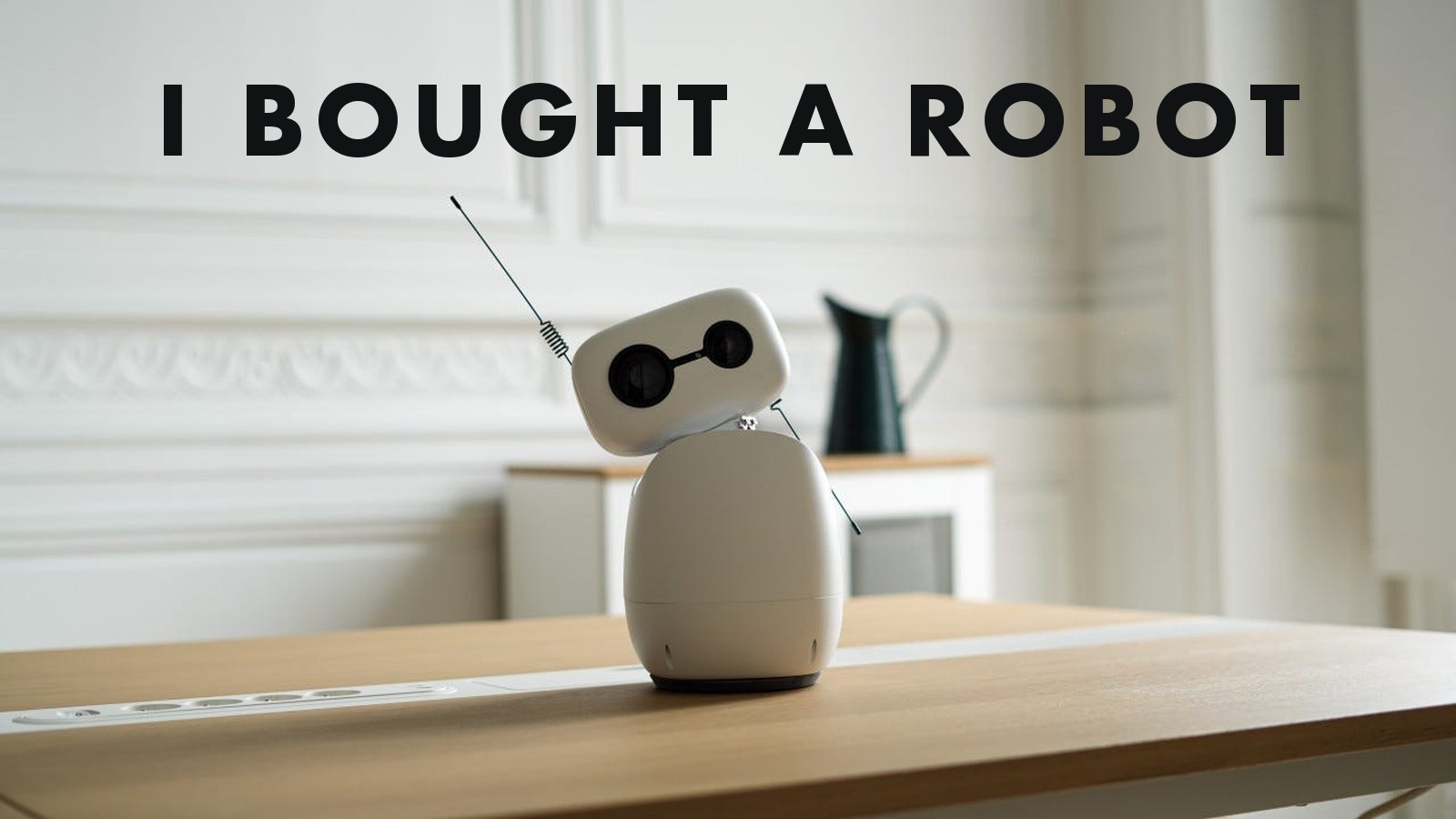
I Bought a Robot. Here Is What I Am Actually Going to Do With It.
A 435 euro open-source robot is coming to my desk. Not because I need a robot, but because working from home, I could use the company.
- ai
- ai-agents
- second-brain
- robotics
- open-source
I just bought a robot.
It is called Reachy Mini, it is open source, it costs 435 euros, and it ships within 90 days, so worst case it reaches me around the middle of November.
It is 28cm tall. It weighs 1.5kg. It has a camera, four microphones, a speaker, and nine servos that turn its head and move two little antennas. Those antennas are how it mimics emotions, which is honestly the part I am most curious about.
It cannot walk. It has no arms. It cannot pick anything up.
So why buy it?
First honest reason: working from home, I miss having a coworker.
Lola does not count. She is here for the treats and she has made that very clear.
Second reason, the real one: our second brain has no face.
For months, Egils and I have been building an AIOS: a second-brain framework specialized for business operations and personal management, marketing, sales, the actual work. It sits on top of your notes, your projects, your clients, your calendar. It answers from what is really in your system, not from what a model guesses.
I use it every day, mostly from WhatsApp. I message it like I message anyone else.
Which is great, and also completely invisible.
Every time I explain it to someone, I have to ask them to imagine it. That is the problem with good systems. Nobody can see them.
A body fixes that.
- I ask a question out loud, it turns toward me
- It answers from my real notes, not from a generic model
- Anyone in the room understands immediately what we have been building
Why this one
I looked at plenty of other options first, and some of them are genuinely impressive.
But they were either closed source, or around 5,000 euros, or they needed a 3D printer and a few free weekends before they would do anything at all.
This one costs just over 400 euros, it is open source top to bottom, and it does everything I actually need.
Because my problem was never locomotion. I do not need something that follows me around the house. Legs cost thousands and add nothing to an agent. I needed something that sees, hears, speaks, and reacts, sitting on a desk.
What I am actually going to use it for
A coworker. This is the one I am most curious about. Typing to an agent and talking to one are not the same experience. Something that answers you out loud, turns its head when you speak, and mimics emotions while it does it, changes how often you actually reach for it. I want to see what it looks like when it reacts to me. I suspect I will use the system more simply because it got nicer to talk to.
Presentations. A live assistant on the table during workshops and talks, instead of me narrating a screen.
Videos and content. It makes an abstract system visible in about three seconds, which is something I have never managed with a slide.
Language practice. If you are trying to learn something hard, a patient thing with a microphone that drills you every single day is exactly the right tool.
Which raises a question I keep going back to. If a robot on your desk is 435 euros today, and it is genuinely nicer to talk to than a chat window, does everyone end up with one of these in a couple of years? The same way everyone ended up with a smart speaker, except this one actually knows your business.
I do not know. But that is the bet.
The part that matters more than the robot
Here is the design decision I care about: the agent does not run on the robot.
Our AIOS keeps doing what it already does. I can tell it to send an invoice, analyze a proposal, or run a piece of research while I work on something else entirely. That work happens where it always happened.
The robot is not the brain. It is the face, the ears and the voice.
Which means the body is swappable. If better hardware ships next year, I write a new connector and the system underneath does not change by a single line.
That is the same principle behind every AI system worth building. Construct the memory and the logic once. Keep the interfaces replaceable. Most companies do the opposite, and then every new tool means starting from zero.
Most companies don't have an AI problem. They have a memory problem.
AI is a copilot, not a replacement. A robot does not change that. It just makes the copilot easier to point at.
What happens next
When it arrives I will show all of it: the unboxing, the wiring, the first time it answers a question from my notes out loud. Including the parts that break, because they will.
If you want the system behind it, not the hardware, I am running a free masterclass on Thursday 27 August, 17:00 Riga / 16:00 CEST / 10:00 ET. That is where I show how the second brain is actually built, the part that works whether or not there is a robot on your desk.
So tell me. In two years, is there one of these on every desk, or is this just me being early and slightly ridiculous?
Related posts
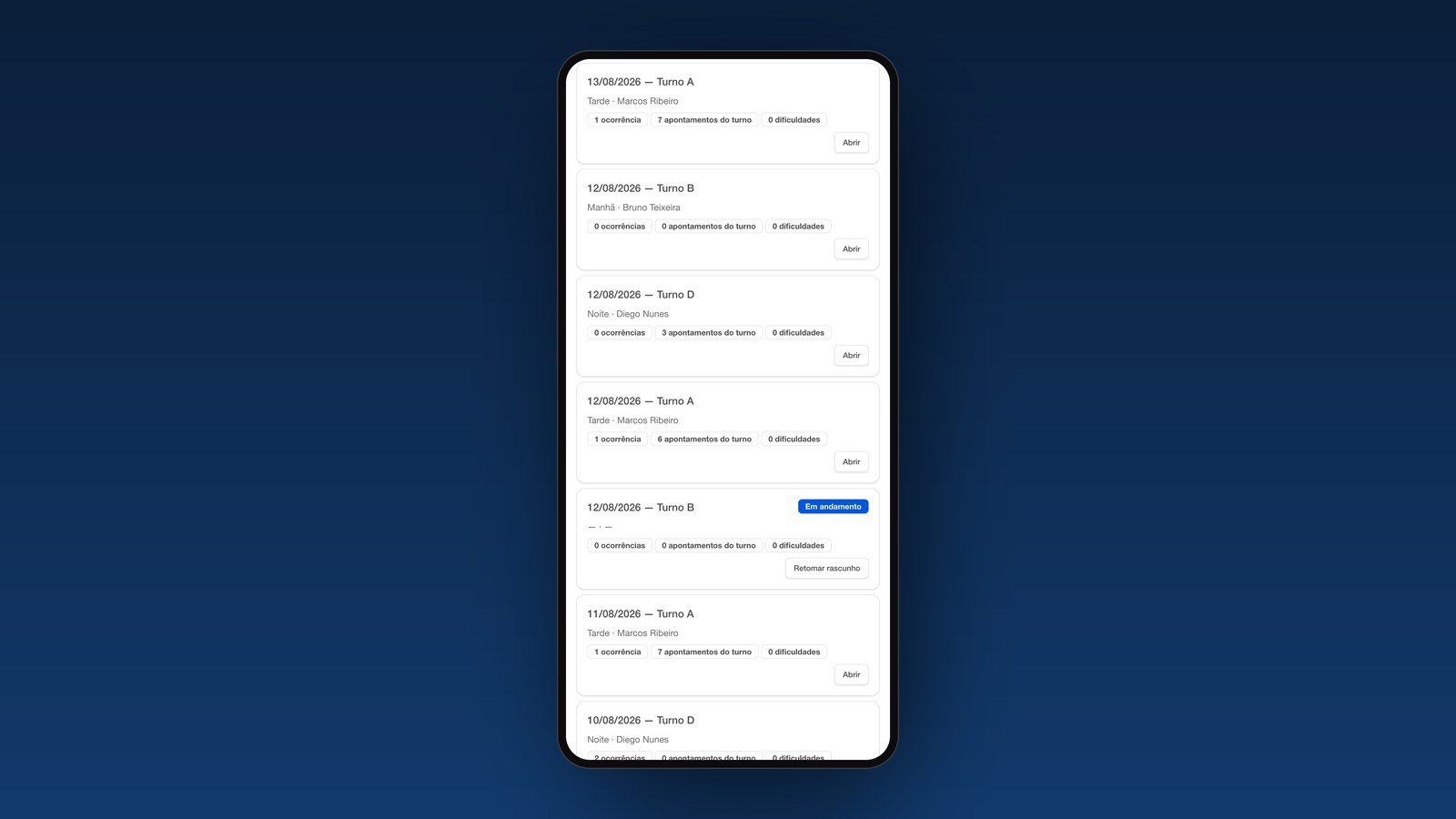
From a long-held idea to a working system in one week: Höganäs' Digital Maintenance Logbook
How Höganäs in Brazil turned a real maintenance need into a working digital proof of concept that people are already using.
From ChatGPT to an AI Operating System: Why Your AI Tools Aren't Producing Value
Most businesses pay for AI tools and still see no real value. The missing piece is an AI operating system: second brain, context and agents working together.

Enterprise AI Agents and Data Security: What Microsoft Scout and the Researcher Agent Actually Change
Microsoft Scout and the Researcher agent bring enterprise AI agents that run inside your identity, GDPR and DLP controls. Here is what changes for business.
Work with us